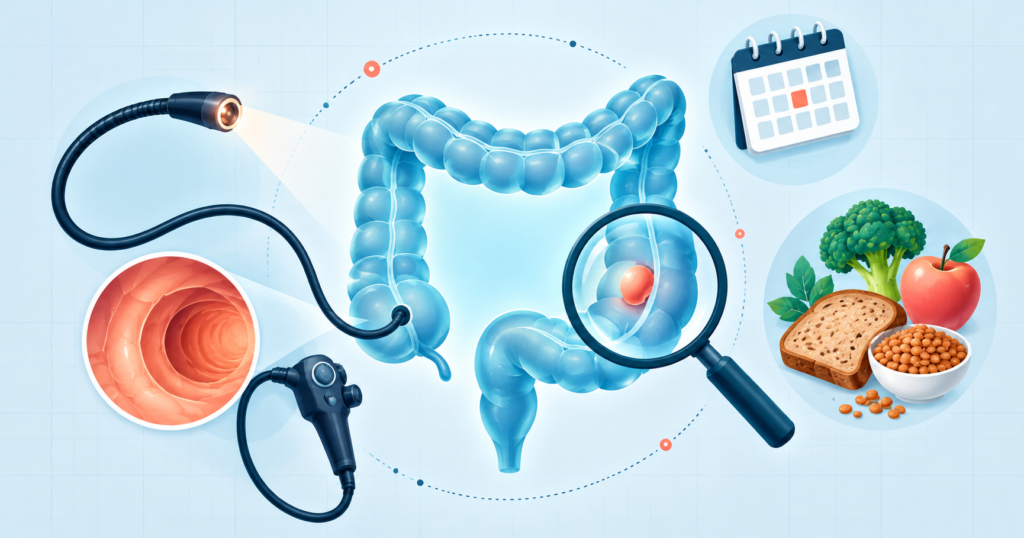
Colon cancer often starts quietly. Many people ignore the early signs and assume they are piles, acidity or a stomach upset. Delay can allow the disease to advance. Knowing the symptoms and acting early improves treatment options. Here is what every patient and family should know about colon cancer and its surgery in Pune.
What is colon cancer?
The colon, or large intestine, is the last part of the digestive tract. Colon cancer begins when cells in its lining grow abnormally. Most colon cancers start as small growths called polyps. Over several years, some polyps can turn cancerous. Removing polyps early can prevent cancer from developing.
Colon cancer and rectal cancer are often discussed together as colorectal cancer. Their treatment can differ, especially for rectal cancer, which lies deep in the pelvis.
Common symptoms
Early colon cancer may cause no symptoms at all. When symptoms appear, they can include:
- Blood in the stool, or black, tar-like stools.
- A change in bowel habits lasting more than a few weeks.
- Constipation or loose motions that do not settle.
- A feeling that the bowel has not emptied fully.
- Abdominal pain, bloating or cramps.
- Narrow, pencil-thin stools.
- Unexplained weight loss.
- Weakness, tiredness and anaemia.
- A lump felt in the abdomen in later stages.
These signs can have other causes, such as piles, infections or irritable bowel. But if they persist, do not self-treat. Get examined, especially if you are above 45 or have a family history.
Who is at higher risk?
- Age above 45 to 50, though younger people are increasingly affected.
- A family history of colon cancer or polyps.
- Inherited conditions such as familial adenomatous polyposis or Lynch syndrome.
- Long-standing inflammatory bowel disease such as ulcerative colitis.
- A diet low in fibre and high in processed or red meat.
- Obesity and a sedentary lifestyle.
- Smoking and heavy alcohol use.
- Type 2 diabetes.
Having a risk factor does not mean you will get cancer. But it is a reason to be alert and to discuss screening with your doctor.
How colon cancer is diagnosed
A proper diagnosis usually involves:
- Clinical examination, including a rectal examination where needed.
- Colonoscopy: A thin flexible camera is passed through the bowel. The doctor can see the growth and take a biopsy. Polyps can also be removed.
- Biopsy: Confirms whether the growth is cancer.
- CT scan or MRI: Shows the extent of the tumour and any spread. MRI is especially useful for rectal tumours.
- Blood tests: Including a blood count and, in some cases, a tumour marker such as CEA, which is used mainly for follow-up.
Together, these tests give the stage of the cancer. The stage guides treatment.
Colon cancer surgery in Pune: the main approach
For most colon cancers that have not spread widely, surgery is the main treatment. The operation is called a colectomy. The surgeon removes:
- The segment of colon containing the tumour.
- A margin of healthy bowel on both sides.
- The nearby lymph nodes, which are tested for spread.
The two healthy ends are then joined together. This join is called an anastomosis. In some patients, a temporary stoma may be needed to protect the join or because of the situation at the time of surgery. Your surgeon will discuss this possibility with you beforehand if it is likely.
The exact operation depends on where the tumour sits. Examples include right hemicolectomy, left hemicolectomy and sigmoid colectomy.
Surgical options
- Laparoscopic colectomy: Done through small incisions. Often allows less pain and a quicker recovery in suitable patients.
- Robotic colectomy: Used in selected cases, particularly when precision in a tight space helps.
- Open colectomy: Used for large or complicated tumours, blockages and emergencies.
The right approach depends on the tumour, your general health and the surgeon’s judgment. Cancer clearance always comes first.
Dr. Rahul Wagh and colon cancer care
Dr. Rahul Wagh is a Consultant Surgical Oncologist in Baner, Pune. He treats gastrointestinal cancers, including colon and rectal cancers, and offers laparoscopic and robotic techniques where suitable. With an MCh in Surgical Oncology and over 15 years of experience, he plans treatment after reviewing your reports and discussing options openly with you and your family.
Preparing for surgery
- Complete the tests advised, such as blood work, heart evaluation and scans.
- Keep your colonoscopy and biopsy reports ready.
- Inform the team about all medicines, especially blood thinners and diabetes medicines.
- Follow bowel preparation and fasting instructions exactly.
- Stop smoking and avoid alcohol.
- Improve nutrition if you are weak or have lost weight. Ask your doctor about supplements.
Recovery after colon surgery
- Most patients start walking within a day or so. Early walking prevents clots and helps the bowel recover.
- Diet restarts gradually, from liquids to soft food and then normal food.
- Pain is controlled with medicines.
- Expect some changes in bowel habit at first. They usually settle.
- Care for the wound as instructed. Report fever, redness, discharge or severe pain.
- Avoid heavy lifting for the period advised by your surgeon.
- Eat small, frequent meals with enough protein and fibre once allowed.
After surgery: reports and further treatment
The removed tissue is examined in the laboratory. The report confirms the stage and the number of lymph nodes involved. Based on this, the oncology team decides whether chemotherapy is needed. Some early-stage cancers need no further treatment. Others benefit from chemotherapy for a few months.
Follow-up usually includes:
- Regular clinical visits.
- Blood tests, including CEA where relevant.
- Periodic CT scans.
- A colonoscopy after a set period to check the bowel.
Follow-up helps detect any recurrence early, when it is easier to treat.
Why early detection matters
Colon cancer found at an early stage is more treatable than one found late. Screening can find polyps before they become cancerous. Many guidelines suggest starting screening colonoscopy around age 45, or earlier if you have a strong family history. Ask your doctor what is right for you.
Lifestyle steps that may lower risk
- Eat more vegetables, fruits, whole grains and pulses.
- Limit red and processed meat.
- Stay physically active.
- Maintain a healthy weight.
- Avoid tobacco and limit alcohol.
- Do not ignore bleeding or changes in bowel habit.
FAQs
Is colon cancer curable? Early stage colon cancer has good outcomes with timely surgery. Results depend on the stage and other factors.
Will I need a colostomy? Not in most colon cancer surgeries. Your surgeon will explain the chance in your case.
Is chemotherapy always needed? No. It depends on the stage and the pathology report.
Can piles and colon cancer be confused? Yes. Bleeding can be wrongly blamed on piles. Persistent bleeding should be investigated.
Can I eat normally after surgery? Most patients return to a normal diet gradually. Your surgeon and dietitian will guide you.
Book a consultation with Dr. Rahul Wagh
- Call or WhatsApp: +91 8956002781
- Manipal Hospital, Baner: OPD 42B1, Oncosciences Dept, Veerbhadra Nagar Rd, Baner-Mahalunge Rd, Baner, Pune 411069
- High Street Square, Baner: 4th Floor, 66, High Street Square, 405, Pancard Club Rd, Baner Gaon, Baner, Pune 411069
- OPD: Monday to Saturday, 10:00 AM to 8:00 PM
- Book Appointment
Visit Dr. Rahul Wagh’s clinic in Baner, Pune: get directions to the surgical oncologist’s clinic in Pune.
This article is for general awareness only. It does not replace a medical consultation. Every patient is different, so treatment decisions must be made after examination and review of reports.