Robotic surgery has become an important option for treating certain cancers. Patients in Pune often ask the same questions. Is it safe? Is it better than open surgery? Am I suitable? This article explains robotic cancer surgery in Pune in plain language, so you can discuss it confidently with your surgeon.
What is robotic cancer surgery?
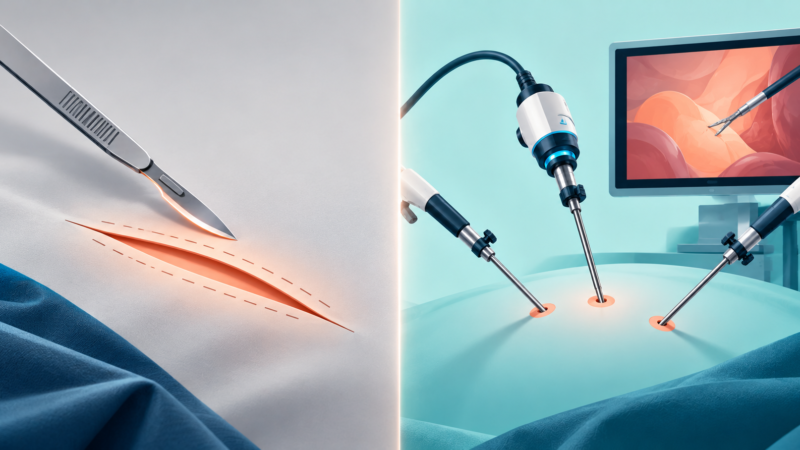
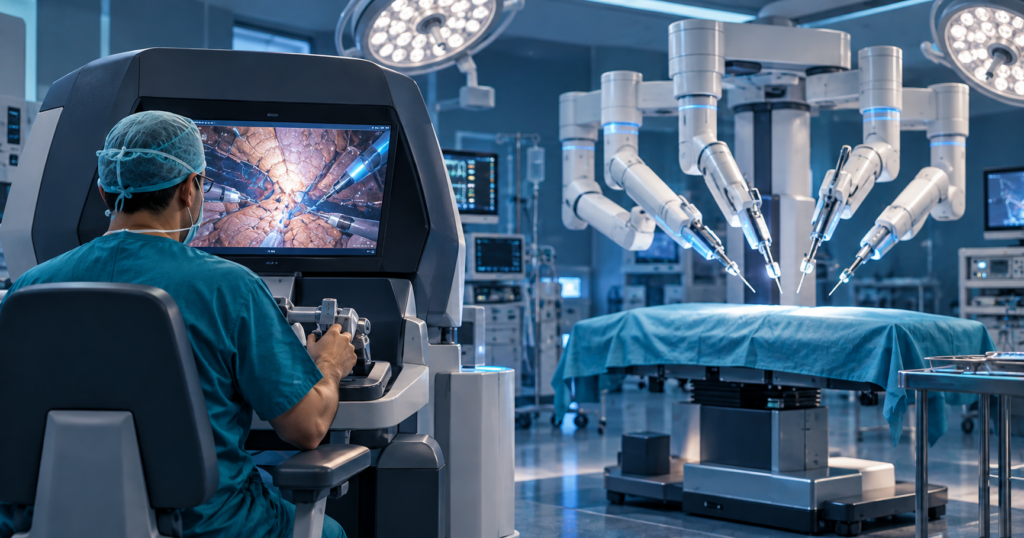
Robotic surgery is a form of minimally invasive surgery. The surgeon makes a few small incisions and inserts a camera and thin instruments. The surgeon then sits at a console and controls the instruments with hand and foot controls.
An important point: the robot does not operate on its own. Every movement is controlled by the surgeon. The robot acts as a highly precise tool that translates the surgeon’s hand movements into fine movements inside the body.
Key features of robotic systems:
- A magnified, high-definition 3D view of the operating area.
- Instruments that bend and rotate more than a human wrist.
- Tremor filtering, which keeps movements steady.
- Better access to deep and narrow areas such as the pelvis.
Possible benefits
Compared with traditional open surgery, robotic surgery may offer:
- Smaller incisions and less scarring.
- Less blood loss in many procedures.
- Less pain after surgery.
- A shorter hospital stay.
- Faster return to routine activities.
- Lower risk of wound infection and hernia at the incision.
These advantages depend on the type of cancer, its stage and the patient. The first priority in cancer surgery is always to remove the tumour completely and safely. The technique should never compromise that.
Cancers where robotic surgery may be used
Robotic techniques are used in selected cases of:
- Rectal and colon cancers, especially deep in the pelvis.
- Prostate cancer.
- Kidney and bladder cancers.
- Gynaecological cancers, such as uterine (endometrial) and cervical cancers.
- Stomach and oesophageal cancers, in selected cases.
- Some head and neck and thyroid procedures.
- Selected liver and pancreatic procedures in specialised centres.
Not every tumour in these groups is suitable. Suitability depends on the exact location, size and stage.
Robotic vs laparoscopic vs open surgery
All three can treat cancer effectively. The best choice depends on the patient.
- Open surgery: One larger incision. Gives direct access and is still the right choice for many large or complex tumours.
- Laparoscopic surgery: Several small incisions with a camera and straight instruments. Good for many cancers.
- Robotic surgery: Small incisions with advanced, flexible instruments and 3D vision. Useful where precision in tight spaces matters.
A good surgeon recommends the approach that is safest and most effective for you, not the most advanced one by default.
Who may be a good candidate
You may be suitable for robotic cancer surgery if:
- The tumour is localised and technically suitable for removal this way.
- Your overall health allows general anaesthesia.
- Previous operations have not left heavy scar tissue that blocks access.
- Imaging shows the tumour can be removed completely with clear margins.
- You understand the benefits, limits and alternatives.
The final decision is made after a full review of your reports and an examination.
Who may need a different approach
Robotic surgery may not be ideal in some situations:
- Very large tumours, or tumours invading neighbouring organs.
- Certain advanced or widely spread cancers.
- Patients with severe heart or lung disease who cannot tolerate the positioning or pressure used in some procedures.
- Cases with extensive earlier surgery or adhesions.
- Emergencies.
Sometimes surgery starts with a robotic or laparoscopic approach and the surgeon decides to convert to open surgery for safety. This is a decision taken in the patient’s interest. It is not a failure.
Robotic cancer surgery in Pune: choosing the right surgeon
Technology matters, but the surgeon matters more. When considering robotic surgery in Pune, ask:
- Is the surgeon trained in surgical oncology, and not only in robotic techniques?
- How much experience does the surgeon have with my type of cancer?
- What is the plan if conversion to open surgery is needed?
- How will my scans and reports be reviewed before deciding?
- What follow-up will I receive after surgery?
Dr. Rahul Wagh is a Consultant Surgical Oncologist in Baner, Pune. He holds an MCh in Surgical Oncology along with a fellowship in advanced laparoscopy and robotic surgery. With over 15 years of experience and 5000+ surgeries, he advises patients on the approach that best fits their cancer, whether robotic, laparoscopic or open.
How to prepare for robotic cancer surgery
- Bring all reports, scans and biopsy slides to your consultation.
- Complete the pre-operative tests advised.
- Share your full medical history and current medicines.
- Stop smoking and limit alcohol well before surgery.
- Follow fasting instructions on the day.
- Arrange a family member to stay with you at the hospital.
What to expect after surgery
- You will be monitored in the recovery area and then your room.
- Walking is encouraged early, as it helps recovery and prevents clots.
- Pain is controlled with medicines.
- Diet is restarted gradually as advised.
- Small incisions need basic wound care.
- The pathology report guides whether more treatment is needed.
- Follow-up visits track recovery and check for recurrence.
Recovery time varies with the operation. Your surgeon will give you a clear plan for your case.
Risks to understand
All surgery carries risks. These include bleeding, infection, injury to nearby organs, reactions to anaesthesia and, in some cases, the need to convert to open surgery. The risk depends on the type of operation and your health. A good surgeon explains these openly before you consent.
FAQs
Is robotic surgery safe for cancer? When performed by trained surgeons in suitable patients, it is widely used and considered safe. Your surgeon will explain the risks for your case.
Does the robot perform the surgery by itself? No. The surgeon controls every movement.
Is robotic surgery always better than open surgery? Not always. It depends on the cancer, the stage and your health.
Will I have scars? Yes, but they are small compared with open surgery.
Does robotic surgery cost more? It can cost more than other approaches. Ask for a clear estimate and discuss insurance coverage before surgery.
Book a consultation with Dr. Rahul Wagh
- Call or WhatsApp: +91 8956002781
- Manipal Hospital, Baner: OPD 42B1, Oncosciences Dept, Veerbhadra Nagar Rd, Baner-Mahalunge Rd, Baner, Pune 411069
- High Street Square, Baner: 4th Floor, 66, High Street Square, 405, Pancard Club Rd, Baner Gaon, Baner, Pune 411069
- OPD: Monday to Saturday, 10:00 AM to 8:00 PM
- Book Appointment
Visit Dr. Rahul Wagh’s clinic in Baner, Pune: get directions to the surgical oncologist’s clinic in Pune.
This article is for general awareness only. It does not replace a medical consultation. Every patient is different, so treatment decisions must be made after examination and review of reports.